
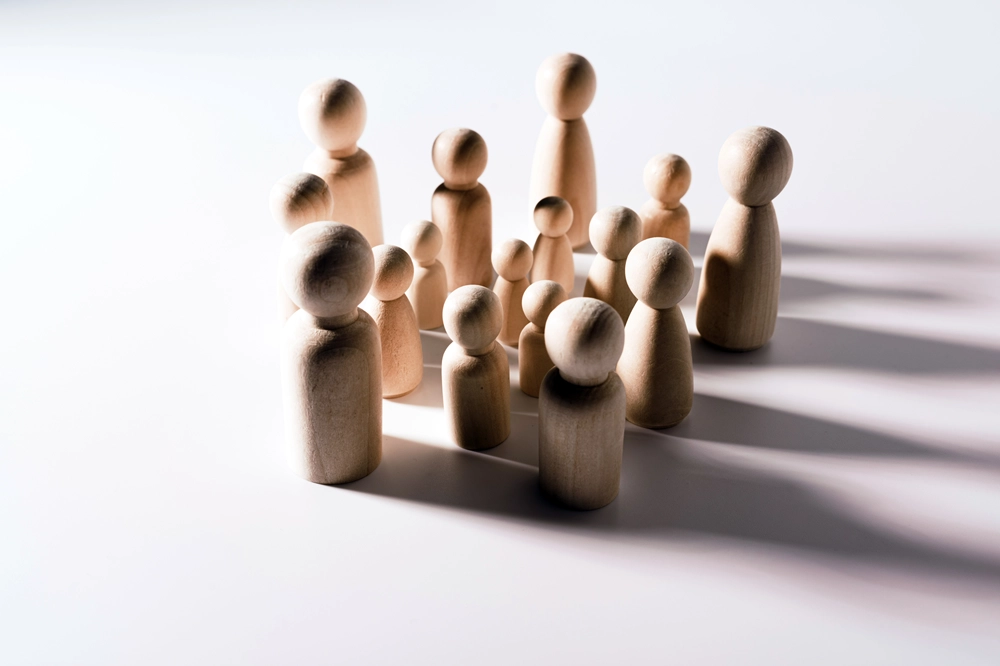
Having close family ties can be an important part of one’s identity. Healthy families can be loyal and share many of the same values. But what happens when a family is so entangled with each other that they actually lose sight of their own autonomy? What if the focus is put on the “family” rather than on the independent “individuals” that make the family unique? When family members over identify with each other, this might be more than just a close family; it could be enmeshment.
Family Enmeshment occurs when boundaries within a family system are unclear or nonexistent. Everyone’s emotions, space, problems, and personal lives are so intertwined together, family members become “meshed,” or overly involved in each other’s lives.
Children raised in enmeshed families hold a sense of obligation to please their families, and are often unable to separate their emotions from those in the family system. Since most of their emotional needs are met within the family, they may have difficulty making or keeping friends. This can be even more apparent in some cultural families.
As children grow into adolescence, they are not likely to gain a strong sense of individual identity because they feel pressure to follow their family’s wishes rather than their own. They do not get the opportunities to assert their needs and desires, nor develop healthy conflict resolution skills. There is no chance to disagree within the family, therefore, they do not learn how to regulate their emotions very well with those outside of the family system.
People raised in enmeshed families tend to have difficulty forming and sustaining outside relationships, including friendships and romantic ones. They are so focused and familiar with the patterns in their enmeshed family, that anything else looks foreign and threatening. It becomes a challenge for them to separate from their family’s way of thinking, therefore, outside relationships are often left or avoided.
In some cases, family enmeshment can enable abuse. For instance, the entire family may support the idea that their parent is a wonderful leader, while never acknowledging abusive behaviors [sexual, physical, verbal, substance use, etc.] Furthermore, if a family member does speak up and correctly identifies the trauma they have experienced, they rarely receive validation, may get shunned, or be encouraged to keep quiet for the sake of “protecting” the family.
Once a person becomes aware of the negative impact that family enmeshment has played in their life, it is important that they start the process of building autonomy and boundaries. This includes working on identifying their true values, personal interest, and what they will no longer tolerate within their family system.
If you are currently experiencing negative side effects of family enmeshment, or in a relationship with someone that is, a professional counselor can help you start the process of “untangling” and gain a stronger sense of how to navigate your personal situation.
References:
Sutton, J. (2024) Enmeshment: Breaking Free From Overbearing Relationships https://positivepsychology.com/enmeshment/
Villines, Z. (2019) When Family Relationships Become Toxic: The Trauma of Enmeshment https://www.goodtherapy.org/blog/when-family-relationships-become-toxic-the-trauma-of-enmeshment-1016197/amp/
Therapist.com (2024) Family enmeshment: What it is and how to heal https://therapist.com/families/family-enmeshment/